
In this post I have summarized some of the things we do as managers, the leadership that comes with being a formal people manager. In our manager role we have important responsibilities and the power to take decisions that influence other people’s lifes. Doing this work in a great way is important for the success of people and for creating a great place to work.
Posts related to being a formal people manager can be found under Being a manager, Support People and Teams, Support Business and Tech, Building a great culture.
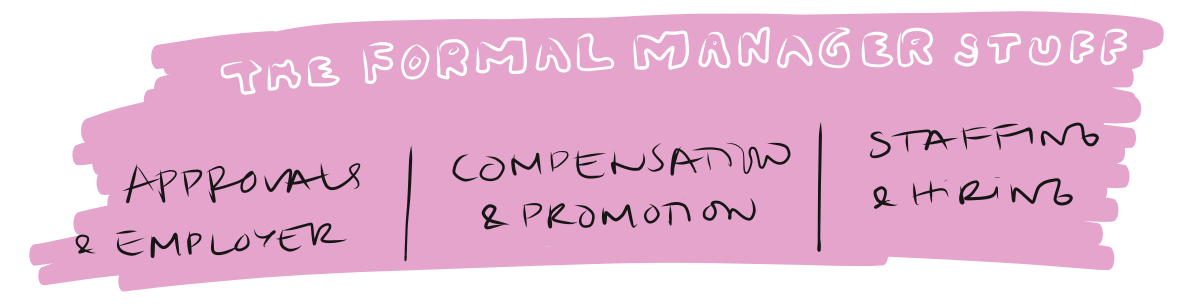
Approvals and being a great employer
Approving stuff. You will have the authority and the obligation to approve things as the employer. This includes things like time off and expenses. It is important that you do this in a timely manner and in a way that is inline with company policies and our legal obligations as an employer. In general this is not a big thing in my manager life, most often I am able to approve the requests that comes in but it is important that you are clear with the people that you work with which the rules are and what we need to consider when taking these decisions.
- When it comes to costs
- The first thing I want to know is what the benefits will be, are those benefits greater than the cost we are taking?
- Secondly I have to look at it from a longer term/bigger perspective, if I say yes this time, does that mean that I will have to say yes the next time as well and if so, is that something I am willing to do?
- The third thing to consider is if there is a fairness perspective that I need to consider, if I say yes now, would that be fair to other people or teams? will they be able to do the same thing? if not, is that ok?
- And other questions that are relevant for the case at hand
- When it comes to time off like holidays
- The question I always want to have an answer to is that it will be ok for the team that this person will be taking this time off (this is something that I would like the people I work with to take responsibility for themselves since we do want to make people take responsibility for their work together with the team.)
- When approving time off you also need to be aware of the policies and legal obligations in this area. There might be rules saying that people are entitled to a certain amount of vacation during the summer period or other regulations like that someone that is on a working visa needs to take a certain amount of days off in a year for their visa to stay valid.
Finding answers to questions. As the formal manager you will have access to information that the employee does not have and finding answers to different questions is something that you might do.
When it does not work out. Sometimes things are not working out. It could be a person that is consistently not meeting the expectations, showing behaviors that are unacceptable or a new hire that is not living up to our expectations. As a manger you need to notice that things are not working and take actions. When in these kinds of situations my recommendation is to always reach out to HR. They are experts on the rules and regulations and can give you guidance on what to do. But even before things are this serious you need to start acting. If you have a new hire you need to have check-points during the probation period where you assess how the person is doing and are having a conversation with the person about things that needs to be improved. If it is not a new hire you need to continuously monitor how things are going so you can start acting and supporting before things goes bad. At anytime when things seems to going in a bad direction you need to be more thorough with your notes. This is because you might need to go back to them to identify patterns and also to remember which actions you have taken and when. Hopefully your feedback and actions will help the person improve but if not you might need to end the employment for that person. If it comes to that point HR will help you to make sure things are handled in the right way which is important for all parties (the person, for you and for the company).
Compensation and Promotions
Compensation review. Such an important thing. This is the opportunity and obligation you have as a manager to ensure that the salaries are as right and fair as possible. This is also one of the big powers that you have over other peoples lives why it is important that you take it seriously and do the best work you can to make it right. To be able to set the right salary adjustments you need to have a good picture of the performance of your individuals and to increase transparency and quality of the data I make sure that the individuals are part of describing the performance for the last year. this could be done as the preparation for development talks but if not I strongly recommend that you do a separate session with the individuals to make sure they know that you have all relevant data going into the compensation review process. Another thing that I find important is to try and avoid giving negative feedback about a persons performance in the review process. That kind of feedback should have been given to the person before it is time for the review so that the person gets the chance to improve before it is “too late”. Another thing I recommend is to find ways to collaborate with peers around the increases you are making since I have learned from experience that it is super valuable to calibrate your decisions with other to increase fairness on a bigger scale.
Promotions. Another really important thing. As a manager you should support your people and helping them navigate the career frameworks is one part of that. You should work on helping them finding ways to execute on their path while they are delivering value to the company and when it is time you will support them in creating a promotion case for themselves. Depending on seniority of the promotion you might be the one taking the promotion decision and then you need to make sure to assess the accomplishments and skills in a fair way. If you are not the one taking the decision you will still need to believe in the promotion and be able to argue for why you think it should go through. As with compensation, promotions are important for people so we as managers have a great responsibility to get this right. We need to ensure fairness and predictability and if we fail on that – people might leave.
Staffing and hiring
Vacation planning for holidays. In times when lots of people are on holiday we need to make sure we have enough people working to “keep the show running”. You as the manager are responsible for staffing why you need to make sure we have a solution in place that works for the business. Often this is about creating a spreadsheet where people fill in their needs and then ask the team to make sure enough people are present at any point in time. If you have on-call you need to make sure you have a plan for on-call for the holiday period as well.
On-call setup. Making sure we can handle problems outside office hours is important if the users of our services are depending on them working outside office hours. One common way to solve that is to have people on stand-by outside office hours (on-call), ready to solve problems that might occur. As a manager you need to make sure we are staffing the on-call rotation with enough people with the right skills. You will also need to make sure we have clear guidelines on what is expected when being on-call and that people being part of the on-call rotation have the knowledge needed to feel comfortable with the responsibility. You also need to make sure that the on-call setup we have are inline with the labour law.
Staffing strategy. You need to look at the current and future needs from the business and make sure you have the right amount of people and that they have the right skillset. You need to make sure that you have a good mix of seniority and different competences. You need to decide if you are going to hire for your needs, develop the people you already have or bring in temporary talent to cover a short term need. The staffing strategy is something you need to revisit several times a year since things tend to change a lot in this area.
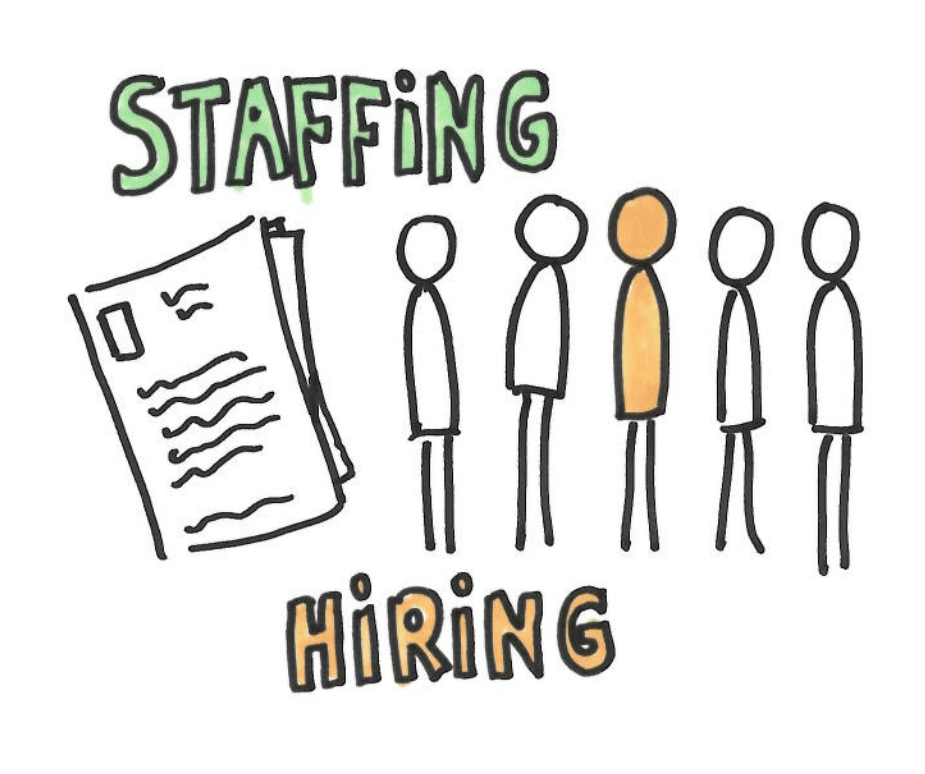
Doing the hiring. Hiring talented people is super important for the success of your organization. To do that well you need to have a good picture of what you are looking for, both when it comes to skills and behavior. You need to be good at describing the role in an unbiased way that will attract a diverse set of candidates. When you have got candidates in your hiring pipeline you need to be good at interviewing and evaluating them in an unbiased way that compare peoples qualities in a fair way. You will have different interviews covering different aspects of what you are looking for evaluating so you will need to train other people in interviewing too. The hiring process has several stages and it is important to know the speed of your hiring process so you can estimate how long it is going to take to fill your open positions. You also need to assess where the bottlenecks are in your process so you know where you should out in effort in improving the hiring process to improve the speed of hiring.
Onboarding. When you have hired a new person it is super important to set that person up for success by giving a good onboarding experience. Good to start even before the person is joining, maybe sending out a welcoming email. Make sure to prepare the first day together with the team, people should know that the person is coming and there should be a plan for the first week. New joiners have lots of different needs ranging from finding the coffee machine to doing their first contribution in code but and all these things are important but in my experience the most important thing is that the person feels welcome and needed.
Offboarding. You don’t want people to leave but sometimes they do. That is totally natural. As their manager you are the one who gets to know first and in that conversation you need to make sure the person feel appreciated, that you are sorry about their decision but respect their choice. You need to decide if you want to convince the person to stay or not (most often you don’t want to push that since people that have decided to leave tend to do so sooner or later). You need to agree on last day of work, whom to communicate this to and when. When the word is out you need to make sure and offboarding plan with handovers and similar gets into place. Some companies organize “exit-interviews” to get input about things that can be improved in the company from people that are leaving. When it is time for the last day it is important that you as the manager make sure to say good-bye in some form. Often people in the workplace go together and organize a good-bye gift and have a good-bye fika on the last day.
 Engineering Leadership in Practice by Åsa Ranneby