
My job as a manager is about doing what I can to make the people and the organization successful. I have impact by applying my leadership to help drive things forward. Sometimes I get questions about what being a manager is all about; what are the responsibilities and what are managers actually doing. I like to look at management from three perspectives:
- The areas of responsibilities we act within
- The things we do and the tools we use
- The kind of leadership we apply to have impact
The five areas of responsibilities
Depending on your role and the setup in the organization you are working on the accountability for a certain area might be different. You might be the single person accountable for one area, you might share the responsibility with someone else for another area and lack formal powers for a third area.

Regardless of this you will always have to try and influence things in all of these areas if the impact of your direct reports are dependent of this. As a manager you are responsible for the performance of the people that reports to you. In practice this means that you need to do whatever it takes to enable their performance. In the end, they are (obviously) the ones that will deliver the impact needed, but you will have to do everything you can to make sure that they have what they need to do a good job.
To be successful as a manager you need to be good at:
- Identifying problems or opportunities within the different areas
- Understanding the impact of these problems and opportunities
- Efficiently prioritize the most important ones
There will always be more things you would like to take action on than you have time for, why prioritization is an important manager skill. Your ability to quickly assess the opportunities and understand the impact, take the priority decisions and also put other things aside will be important for your ability to become successful without burning out.
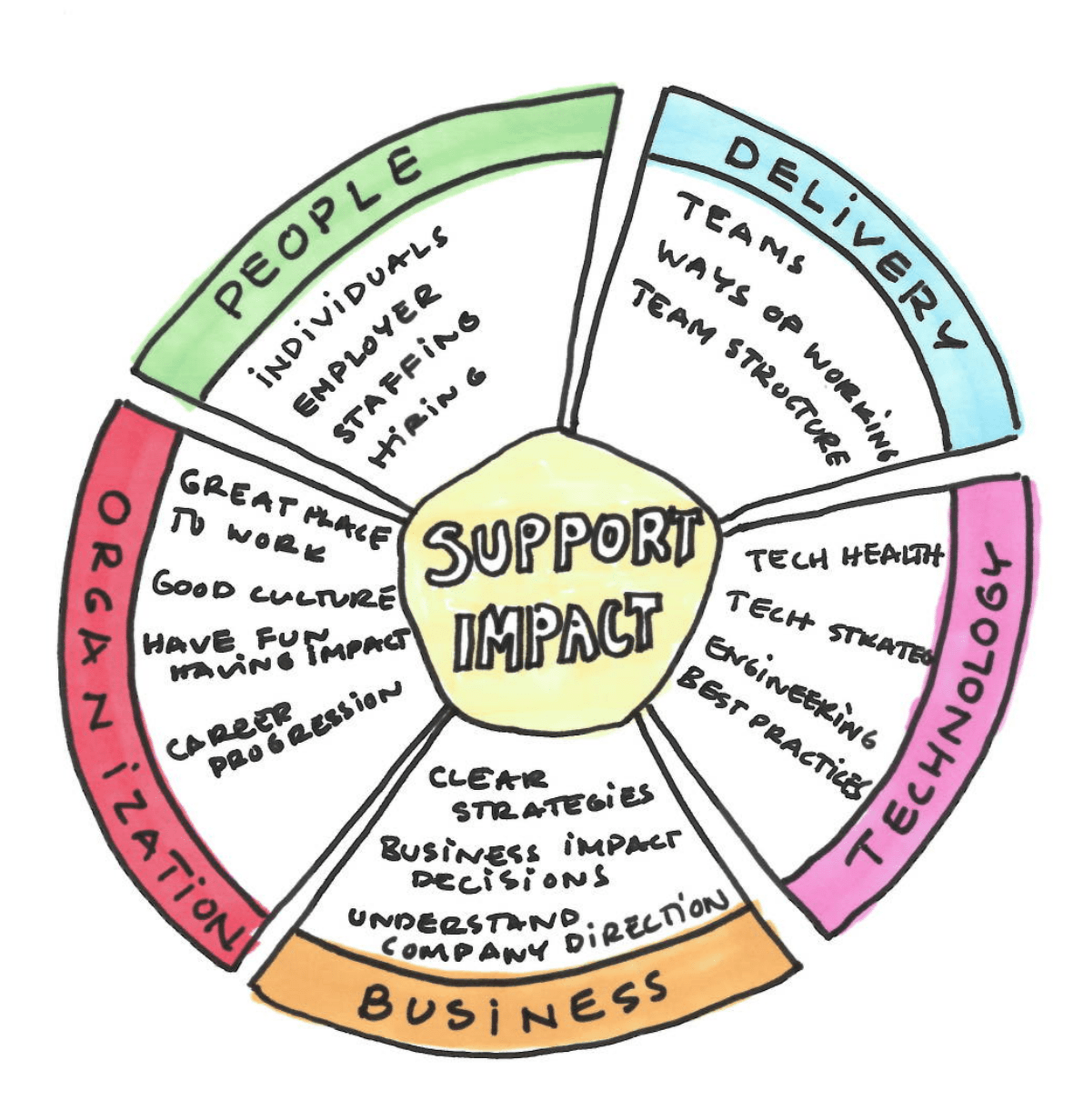
People
The work we do to support the individuals that reports to us. This is about helping people remove problems and support their growth. We also need to be good at helping people understand their motivational drivers since people that enjoy their work deliver better results. This category also includes being the employer representative in the employer – employee relationship.
Driving staffing and hiring is an area that comes with the role as a people manager. The work we do to make sure that we have the right staffing in place and that we hire efficiently when needed. The staffing and hiring strategy should take diversity into account.
Delivery
This is the work we do to support the teams that our people work in. Includes supporting the collaboration in the team and make sure we continuously improve our speed and delivery. Also includes helping out when needed to resolve blockers or fostering cross-team collaboration. Some manager roles put more focus in this area than others but regardless of this, every manager needs to make sure that the team is functioning well since their direct reports will not be able to perform great in a bad team context.
Besides great team collaboration you will need good ways of working to support great delivery. As managers we might need to step in from time to time to help the team define their processes, increase their ability to plan work or increase their ability to know their own speed and capacity.
Another thing you will need to ensure as a manager is that the team setup we have in the organization is the right one to support delivery. You want to have enough separation to enable the team to take autonomous decisions and not becoming blocked or slowed down by their dependencies towards other teams, but you also need to ensure the right amount of collaboration to ensure that the decisions are good from the holistic picture as well.
Technology
As a manager in an engineering organization you will always be able to influence the technology in the organization. The amount of accountability you have as a manager for the technology area will differ from different organizations.
In the technology area we need to support people and teams to take responsibility for the short term and long term tech health of the things we own. This could for example be about helping people to describe why something technical needs to be done from a business perspective or identifying stability issues that needs to be improved due to reoccurring incidents. Besides taking actions to analyze and act on improving tech health, you might need to make sure we are using good engineering practices to produce high quality code. One thing I find important as a leader in an engineering organization is to not step in too much.
Another thing that is important in the technology area is to make sure that we have good technical strategies to drive us forward. We need to make sure that we know where we are going to take good decisions today. The strategies needs to be aligned both with other technical strategies in the company as well as the overall strategy for the business.
Business
Depending on your role and the organization you are in you might or might not be in charge of the business strategy for your team. Regardless of the accountability you will need to make sure that all people in your team are aware of our business strategies and the company direction. People need to understand how their work relates to the big picture and the needs of the customers. They also need to be aware of their stakeholders and their needs. This is important for people to understand the purpose of their work but will also help them take good decisions in their day to day work. The more empowered your organization is the more important it becomes for people to be fully aware about the business strategies. This is about making sure we have a good strategy that everyone is aware of to make sure everyone knows were we are going and why since that is important for the individuals to take good decisions in their day to day work. Everyone also needs to have a good picture of how their work fits into the bigger picture in the company to understand the value of their own work.
Another important aspect in the business perspective is that we take our decisions based on business impact. People in our organization should be aware of our metrics and take the day to day decisions to maximize their impact. Tech driven decisions should also be taken with a business impact perspective and even when it is hard to quantify the impact in measurable terms we should try our best to reason about the business impact of our decisions.
Organization
You want the organization to be a great place to work were people want to stay for a long time. A great place to work needs a good culture that enable inclusive collaboration and it needs a continuous improvement mindset. The culture needs to be friendly and people needs to be able to laugh together. But just having fun together is not what you are after, what you want is a culture where people have fun together while delivering great impact for the company. Another thing that makes people want to stay in the organization is ability to grow and have career progression.
As managers we need to make sure that we as an organization are living our values to nurture the culture we believe in and continuously work on improving. You will always collaborate with other leads to achieve success in this area.
The things we do and the tools we use
To influence people we apply our leadership. Our ability to influence things in a good direction will be based on the actions we take and the way we do those actions.
People: Supporting the individual
Presence in the day to day work is something that is really helpful in your support since you will be able to learn a lot about the person by collaborating or observing them in their day to day context. Having more context around the things the individuals are working on will also help. Another benefit is that you will have a better chance of giving relevant feedback just-in-time and you will also be easier to approach for the individuals.
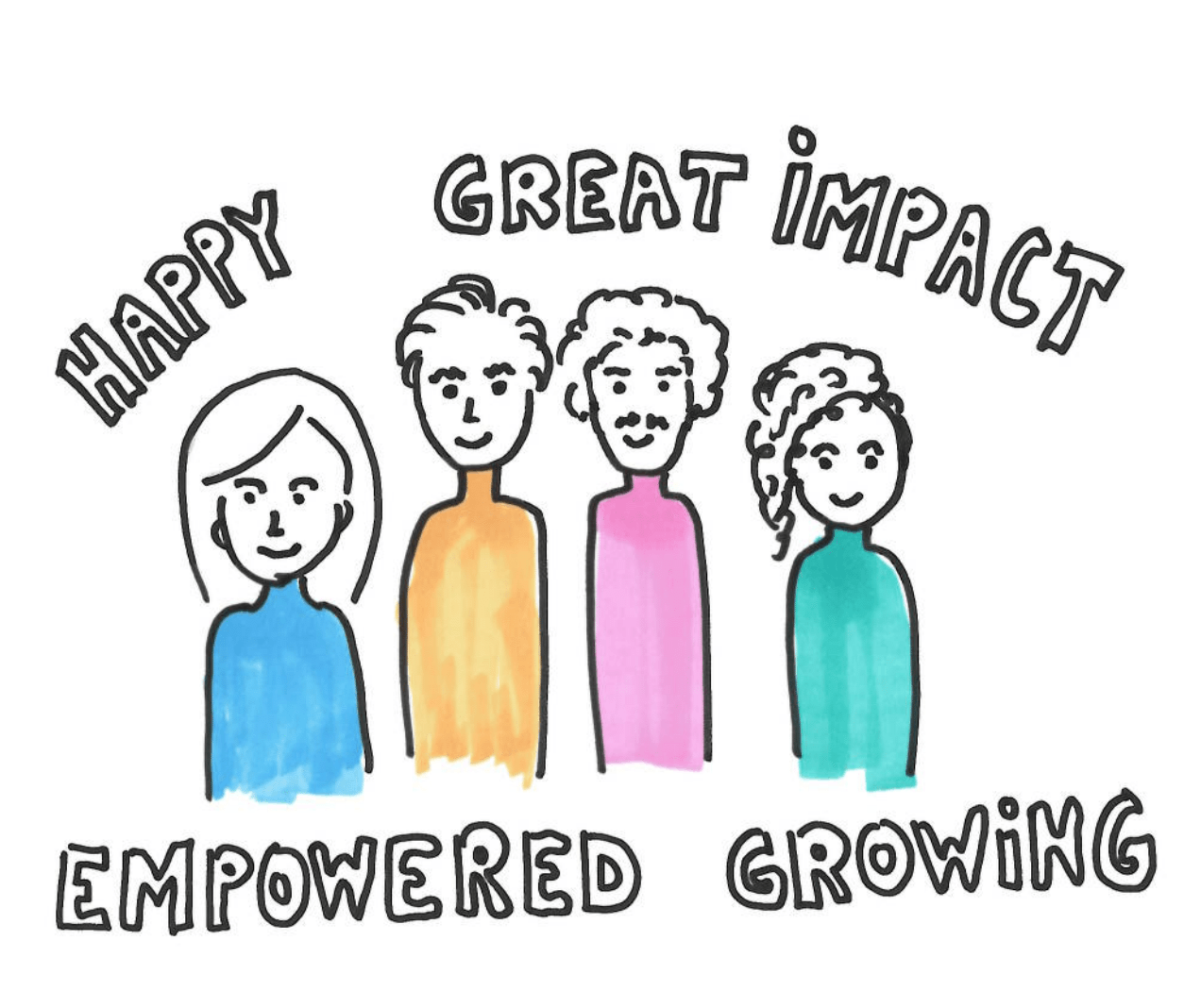
1:1s. Important tool for the individual support. In 1:1s you get the chance to get really close to an individual and build a strong relationship with a high level of trust. Trust is super important for everything else that you will do to support the individual. Read more in this post .
Coaching. As a servant leader you always want to support the individual to take their own decisions why coaching is a super valuable tool. As the manager it is important to balance coaching and mentoring depending on situation and the seniority of the person you are supporting. I plan to write more about how I do coaching in my manager work.
Feedback. This is an amazing tool for growth and improvement. It has taken me some time to comfortably give people constructive feedback but wow how powerful it is when you can do that in an open way with people that you work with. The level of growth and insights you can get when it is easy to be totally honest with someone is amazing. In this context I can not stress enough how important it is to build a relationship with lots of trust and to deliver you feedback in a way that it is easy for the person to receive (and I don’t mean sugarcoating, I mean that you should spend time formulating your message in a way that the person understands and can take to heart). I will write a post about what I have learned about feedback.
Motivation sessions. Sometimes you need to help an individual understanding frustrations, lack of motivation or help them getting ideas of where they might want to take their careers or growth and then it could be good to do a session to get a deeper understanding of the motivational drivers for this individual. Examples of sessions that I have been using can be found in this post.
Finding answers to questions. As a servant leader you want to support your people so that they can do a great job. When I have the chance I try to help them with things that I can do. This is a way for me to off-load them and also to show them that I want to help and that I am not afraid of rolling up my sleeves and do the work when that is needed. I will balance these helping out activities with allowing people to drive things themselves to make sure that I am not removing any growth opportunities by helping out.
Drive change when needed. When things are not working properly we might need to help individuals through driving change initiatives that will improve the situation. The changes needed could be anything and depending on the organization and your sphere of influence the actions you take will wary. Read more about driving technical change in this post, it might be helpful even if you are not about to drive a technical change.
Communicate when needed. When people have a clear picture of what is going on and why they will be able to take better decisions and feel more in control of things. As a manager you have a great opportunity to create an environment where it is clear to people where we are right now, where we are going, what they can expect from us in management and what it expected from them. I find it valuable to spend time to create a clear communication around change processes we are in, high level strategies, clarification of the compensation review process and similar.
People: The formal powers
Approving stuff. You will have the authority and the obligation to approve things as the employer. This includes things like time off and expenses. It is important that you do this in a timely manner and in a way that is inline with company policies and our legal obligations as an employer. In general this is not a big thing in my manager life, most often I am able to approve the requests that comes in but it is important that you are clear with the people that you work with which the rules are and what we need to consider when taking these decisions.
- When it comes to costs
- The first thing I want to know is what the benefits will be, are those benefits greater than the cost we are taking?
- Secondly I have to look at it from a longer term/bigger perspective, if I say yes this time, does that mean that I will have to say yes the next time as well and if so, is that something I am willing to do?
- The third thing to consider is if there is a fairness perspective that I need to consider, if I say yes now, would that be fair to other people or teams? will they be able to do the same thing? if not, is that ok?
- And other questions that are relevant for the case at hand
- When it comes to time off like holidays
- The question I always want to have an answer to is that it will be ok for the team that this person will be taking this time off (this is something that I would like the people I work with to take responsibility for themselves since we do want to make people take responsibility for their work together with the team.)
- When approving time off you also need to be aware of the policies and legal obligations in this area. There might be rules saying that people are entitled to a certain amount of vacation during the summer period or other regulations like that someone that is on a working visa needs to take a certain amount of days off in a year for their visa to stay valid.
Finding answers to questions. As the formal manager you will have access to information that the employee does not have and finding answers to different questions is something that you might do.
Compensation review. Such an important thing. This is the opportunity and obligation you have as a manager to ensure that the salaries are as right and fair as possible. This is also one of the big powers that you have over other peoples lives why it is important that you take it seriously and do the best work you can to make it right. To be able to set the right salary adjustments you need to have a good picture of the performance of your individuals and to increase transparency and quality of the data I make sure that the individuals are part of describing the performance for the last year. this could be done as the preparation for development talks but if not I strongly recommend that you do a separate session with the individuals to make sure they know that you have all relevant data going into the compensation review process. Another thing that I find important is to try and avoid giving negative feedback about a persons performance in the review process. That kind of feedback should have been given to the person before it is time for the review so that the person gets the chance to improve before it is “too late”. Another thing I recommend is to find ways to collaborate with peers around the increases you are making since I have learned from experience that it is super valuable to calibrate your decisions with other to increase fairness on a bigger scale.
Promotions. Another really important thing. As a manager you should support your people and helping them navigate the career frameworks is one part of that. You should work on helping them finding ways to execute on their path while they are delivering value to the company and when it is time you will support them in creating a promotion case for themselves. Depending on seniority of the promotion you might be the one taking the promotion decision and then you need to make sure to assess the accomplishments and skills in a fair way. If you are not the one taking the decision you will still need to believe in the promotion and be able to argue for why you think it should go through. As with compensation, promotions are important for people so we as managers have a great responsibility to get this right. We need to ensure fairness and predictability and if we fail on that – people might leave.
When it does not work out. Sometimes things are not working out. It could be a person that is consistently not meeting the expectations, showing behaviors that are unacceptable or a new hire that is not living up to our expectations. As a manger you need to notice that things are not working and take actions. When in these kinds of situations my recommendation is to always reach out to HR. They are experts on the rules and regulations and can give you guidance on what to do. But even before things are this serious you need to start acting. If you have a new hire you need to have check-points during the probation period where you assess how the person is doing and are having a conversation with the person about things that needs to be improved. If it is not a new hire you need to continuously monitor how things are going so you can start acting and supporting before things goes bad. At anytime when things seems to going in a bad direction you need to be more thorough with your notes. This is because you might need to go back to them to identify patterns and also to remember which actions you have taken and when. Hopefully your feedback and actions will help the person improve but if not you might need to end the employment for that person. If it comes to that point HR will help you to make sure things are handled in the right way which is important for all parties (the person, for you and for the company).
People: Staffing and hiring
Vacation planning for holidays. In times when lots of people are on holiday we need to make sure we have enough people working to “keep the show running”. You as the manager are responsible for staffing why you need to make sure we have a solution in place that works for the business. Often this is about creating a spreadsheet where people fill in their needs and then ask the team to make sure enough people are present at any point in time. If you have on-call you need to make sure you have a plan for on-call for the holiday period as well.
On-call setup. Making sure we can handle problems outside office hours is important if the users of our services are depending on them working outside office hours. One common way to solve that is to have people on stand-by outside office hours (on-call), ready to solve problems that might occur. As a manager you need to make sure we are staffing the on-call rotation with enough people with the right skills. You will also need to make sure we have clear guidelines on what is expected when being on-call and that people being part of the on-call rotation have the knowledge needed to feel comfortable with the responsibility. You also need to make sure that the on-call setup we have are inline with the labour law.
Staffing strategy. You need to look at the current and future needs from the business and make sure you have the right amount of people and that they have the right skillset. You need to make sure that you have a good mix of seniority and different competences. You need to decide if you are going to hire for your needs, develop the people you already have or bring in temporary talent to cover a short term need. The staffing strategy is something you need to revisit several times a year since things tend to change a lot in this area.
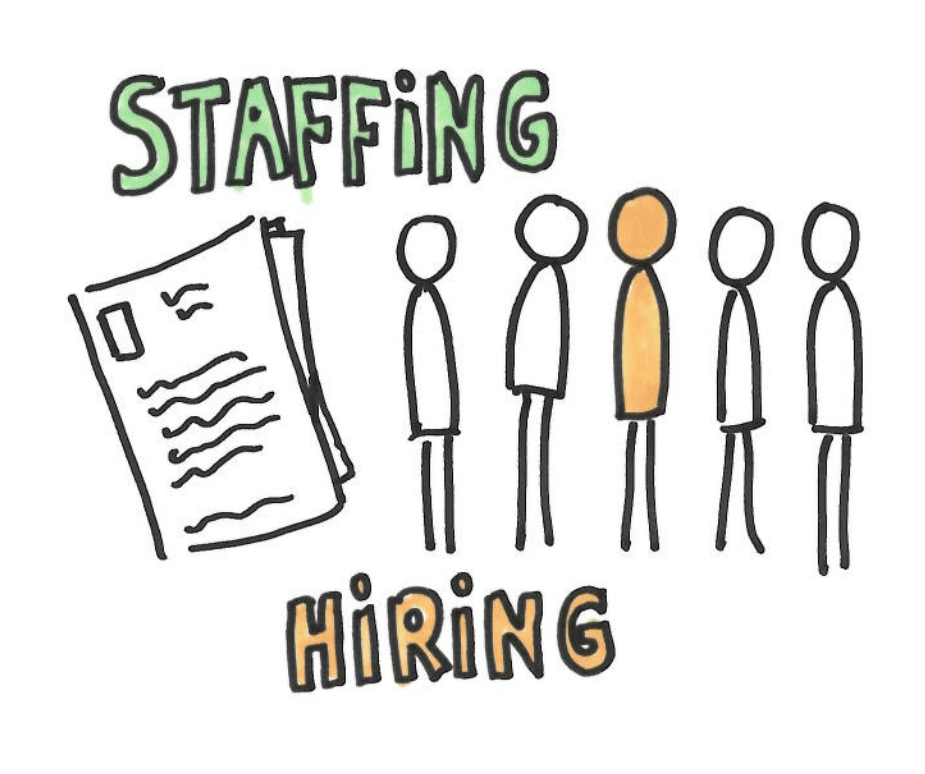
Doing the hiring. Hiring talented people is super important for the success of your organization. To do that well you need to have a good picture of what you are looking for, both when it comes to skills and behavior. You need to be good at describing the role in an unbiased way that will attract a diverse set of candidates. When you have got candidates in your hiring pipeline you need to be good at interviewing and evaluating them in an unbiased way that compare peoples qualities in a fair way. You will have different interviews covering different aspects of what you are looking for evaluating so you will need to train other people in interviewing too. The hiring process has several stages and it is important to know the speed of your hiring process so you can estimate how long it is going to take to fill your open positions. You also need to assess where the bottlenecks are in your process so you know where you should out in effort in improving the hiring process to improve the speed of hiring.
Onboarding. When you have hired a new person it is super important to set that person up for success by giving a good onboarding experience. Good to start even before the person is joining, maybe sending out a welcoming email. Make sure to prepare the first day together with the team, people should know that the person is coming and there should be a plan for the first week. New joiners have lots of different needs ranging from finding the coffee machine to doing their first contribution in code but and all these things are important but in my experience the most important thing is that the person feels welcome and needed.
Offboarding. You don’t want people to leave but sometimes they do. That is totally natural. As their manager you are the one who gets to know first and in that conversation you need to make sure the person feel appreciated, that you are sorry about their decision but respect their choice. You need to decide if you want to convince the person to stay or not (most often you don’t want to push that since people that have decided to leave tend to do so sooner or later). You need to agree on last day of work, whom to communicate this to and when. When the word is out you need to make sure and offboarding plan with handovers and similar gets into place. Some companies organize “exit-interviews” to get input about things that can be improved in the company from people that are leaving. When it is time for the last day it is important that you as the manager make sure to say good-bye in some form. Often people in the workplace go together and organize a good-bye gift and have a good-bye fika on the last day.
Delivery: the things we do
Planning. A big topic for any team. You always need a plan but you don’t want to spend too much time on creating that plan since you want to spend most of your time on doing work – not talking about work. That said it is super important that we do spend our time on the right things why planning is crucial. Another thing that is true about plans is that they will always change since the world is changing around us. I think it is totally fine to change your plan but it is always better to have one to change so we should never use uncertainty as a reason for not creating a plan. There are lots of methods for planning and running agile delivery and as a manager you need to be able to support the team regardless of the method they are using. You need to identify when planning is not as efficient as it should, when we fail to plan enough and when we spend too much time on planning.
Estimation or forecasting. You also need to be able to help the team understanding their capacity and the complexity of the work they are taking on since it is important that they are taking on the right amount of work to succeed (not too little nor too much). I am fond of low effort methods where we don’t spend a lot of time estimating but instead try to learn from our past experiences and use forecasting to increase our predictibility.
Retros. Continuous improvement is a wonderful thing! So powerful to take small improvement steps all the time instead of a few big leaps. With a proper continuous improvement mindset failing is not that dangerous which will encourage you to take bigger risks that can lead to innovation that you otherwise would miss out on. Efficient teams work with retrospectives on a regular basis. The retrospects can be open and work on identifying things that are working well or not so well but they can also be targeted towards a specific topics like feedback culture in the team or an increased amount of incident. Having retrospectives to identify improvement opportunities is powerful tool but only if we actually do something about the things we identify. As a leader you need to make sure that the team is following through on their actions and hold them accountable otherwise and look into the reasons for not following through. Maybe too many actions are agreed upon with the result that none of them are happening.
Facilitation. Supporting delivery is a lot about supporting a team in their collaboration. Lots of activities the team does together are in some sort of meeting form why great facilitation skills are a big asset. Several things are important to make a meeting successful and you need to master them all:
- Setting the right goal for the meeting to get the outcome needed. giving the context needed about background and purpose to get people on the same base.
- Providing a structure that will get you the outcome needed and enable people to contribute efficiently and inclusively.
- Driving the meeting. Making sure we are following the plan, keeping track of time and adjusting the agenda when needed.
- Facilitate the conversation in the meeting. Summarize what is being said and clarify the decisions that are being made
- Ending the meeting. Summarizing the outcome and make sure we have defined next steps when needed.
- Making sure documentation from the meeting are taken and that the results are communicated to the right people.
In the meeting you need to make sure that all perspectives come into play, that all participants feel included and gets heard and that the conversations are moving in the right direction to reach the output you are after. This require active leadership from you in the session and you often need to think quickly and adjust the agenda/discussions along the way, If you as a person are more comfortable with structured discussions than more fluid discussions where the next steps are defined by the outcome of the discussion you should probably choose a structure for the meeting that enable you to facilitate the session in a good way. If the meeting is going in the wrong direction or the discussion is not productive a good thing is to end the discussion and in some cases end the whole meeting. I know from experience that it is easier said than done but I still encourage you to do it in such situations.
Getting people onboard with your ideas. As a leader in the team you might end up in a situation where you want to communicate something to the team that it is not given that the team will agree with. You want them to understand what you are saying and understand why you think this is a good thing. In these situations you need to think carefully about the message you are sending and in my experience the most important thing is that you send a message that you believe in. Even when you have to communicate something that you might not fully agree with, you need to find a way to reason about it that you buy in to yourself, otherwise people will see your doubts and challenge you on them. When you have formed a message with your own words you need to think about what people will hear when you tell them the message, what they will be concerned or worried about and why, which questions will they ask and which disagreements might come up. The more you know about the perspective of others the better you will be at phrasing the message in a way that people will understand and hopefully 🙂 agree with. Doing this exercise will also prepare you in the sense that you will improve your message and believe in it even more.
Team Health. Teams need to work well together to deliver great impact. Everyone needs to feel at home in the team and have what they need to successfully deliver great value in the team together. The team needs to communicate with each other in a good way, work in a sustainable pace and be proud about their accomplishment. They need to feel like they are learning and improving and have fun while working together. As an engineering team it is also important that people feel proud about the code that is produced and the quality of their services. As a manager you need to monitor how the team is doing to identify when you need to take actions. One way to monitor this is to talk to people in the team about how things are going but it is also good to take a more structured holistic approach to measure the team health. This could for instance be done with a team health survey that you do a few times a year or so.
Team dynamics. There are lots of research around team dynamics and what kind of support a team needs in different situations. One thing that is clear is that a well functioning team is not a constant thing, any change in that team will have impact on the team and could have impact on the team productivity. A team goes through different phases and will need different kind of support during these phases.
- A newly formed team will need help getting to know each other and find their ways of working. In this phase people generally are very friendly and flexible with a clear focus on wanting to make things work.
- As the people in the team gets more comfortable with each other they will become more comfortable raising their opinions even when they disagree and it is not uncommon that conflicts arise in this phase. As a leader in that team you will need to support potential conflicts and help creating an atmosphere where people are honest in a constructive and respectful way.
- When people have established themselves in the team and know more about each other the team is becoming productive. They will stumble into situations where disagreement or misalignment appears but have an open climate where they can handle these kind of issues and will be needing less support to move forward from such a situation.
- The final phase is the truly productive team where things just work. People collaborate without thinking of it and experience themselves as a well oiled machine that can take on any challenge that comes a long since they are so strong together. This kind of well functioning teams are in my experience very rare which is not that surprising since few teams stay stable for a long enough time without any change coming their way.
Technology: the things we do
Defining the tech strategy. If there is a lack of technical strategy that will help us take good decisions that position us well for the future you will need to support the creation of a tech strategy. Creating a great tech strategy might or might not be included in the responsibilities of you as the manager but regardless of that you will have to support the creation of the strategy if that is needed. Depending on your needs a tech strategy could for instance be about defining a target architecture, taking decisions on which technologies to use or defining what good looks like and creating guidelines for how we build our tech. The strategy that we define should help us take good and aligned decisions in our day to day work.
Tech Health. It is important that the teams are monitoring the quality and health of the systems they own. Quality in this aspect could be things like number of bugs, test coverage, performance, stability, recoverability, accessibility, security or tech debt as in unnecessary complexity or unused code. A team needs to be aware of their current state of things and make sure to improve things when needed. We need to continuously improve our tech to make sure that we don’t get slow in the future. Having a plan for improving tech that can be prioritized together with the business priorities is important and as a manager you need to support the team in putting this into place if needed. The same goes for making sure that the team is using good engineering best practices to ensure good tech solutions both short term and long term.
Learning and innovation. When focusing on delivery you might not get into innovative mode or get enough space to develop your skills or share knowledge with others. For us to be long term successful we need to get into creative thinking and learn new things why we need to make sure we have enough of that in our day to day work. One way to achieve this could be to do “hacking events” or focused efforts to increase learning. As a manager you need to make sure that people in the organization is developing their skills and that we continuously improve our skillset as an organization. A low effort way to share knowledge (and practice people’s teaching/presentation skills is to organized lunch and learn sessions where someone holds a presentation about a topic, a system for a group of people. You could also watch a video together and discuss the contents together afterwards. Mob or pair programming is also a technique to increase learning in your team. Helping teams increase pair programming or close collaboration in the team and encourage them to try out mob programming is something you can do.
Business: the things we do
Priorities. In all organization we need to prioritize the work that we do. We need to decide what we are going to do and the things we are not going to do. There are lots of different models for doing prioritization that can help you do this. My opinion is that regardless of model you need to make sure to base your prioritization decisions on business impact and even when it is difficult to get good metrics in place for the impact you need to reason about the impact before taking decisions. Another thing that I believe strongly in is that you need a low effort tool to define the business impact since you don’t want to spend too much time estimating and planning work but instead spend as much time as possible doing work.
Clear vision, mission and strategy. In many organizations there is a product organization that is responsible for setting the vision and strategy. When that is the case one thing you as a manager might need to help with is communicate that strategy or support product in getting the vision into place. As a manager you will need to be able to create a strategy if that is needed, either by setting the direction yourself or by facilitating that process in collaboration with others. Setting a strategy in a way where people can take part on defining parts of the strategy is a very good way to create buy-in and make people engaged in applying the strategy.
Metrics. The team needs to be aware of how they are doing and one way of getting there is to be on top of your metrics. It can be the company metrics you try to move, the data coming back from an A/B test, the reliability and performance metrics or some metric the team can use to keep track of their own speed. Your job as a manager is to make sure the team is working actively on taking metric driven decisions and help them get there if they need support.
Organization: the things we do
Supporting other leaders. Sharing our experiences to align with others and continuously improve the leadership we are providing in the company. This is a super good way for more senior managers to help more junior managers to grow but it is also a very good way for the more senior managers to grow as well. The cool thing that happens when sharing your challenges and discuss which actions to take is that you get to take part in so many more experiences than the one you are experiencing in your own work with the people that you work with. Important to think about when sharing context about your situation with others is to only share as much as you need to get support and make sure to protect the integrity of the people involved.
Drive change initiatives. When something is not working as it should and it is important enough for us to try and fix it now you should try and find a way forward. It could be anything from asking someone for help or setting up a big change initiative for success.
Drive cultural improvements. The goal is that our organization should live up to our values and be a great place to work. This needs a constant attention and you will need to work on improving things to create the culture you are after. It could be things like providing bias trainings to increase inclusive behaviors or an initiative to increase the skills in giving and receiving feedback or decision making or something else.
Diversity and inclusion. Two really important topics. Diverse teams that collaborate well will produce greater results but diversity is not enough. You need to work actively on building an inclusive culture where everyone feel accepted and appreciated. This is a difficult things since people’s good intent will not be enough, everyone will need to challenge their own unconscious biases to build a truly inclusive culture. Inclusive facilitation techniques and bias training are a few examples of things you can do to improve inclusion. Hiring that focuses on diversity aspects is another thing that can have impact. Making people aware and observant and encouraged to highlight whenever we should improve is key to building a more diverse and inclusive culture.
Monitor the health of the organization. Depending on the tools you have at hand in the company you will have more or less information about how your organization is doing but as a manager you need to have a good feeling for how the people in the organization is doing. Are people happy, stressed, bored or frustrated and what are the reasons for that. If you have survey data at hand that is a helpful start for your monitoring but the most important tool you have at hand is to walk around in the office and ask people what’s on their mind.
The leadership we provide
I apply leadership to influence the people that I work with. The leadership I try to apply is the kind of leadership that I believe in, a leadership that is based on my core values.
What is a good leader?
- A good leader makes good things happen. And a good leader is driving those things in a way that makes people want to follow.
- A good leader support people to achieve the things they did not think were possible.
- A good leader helps facilitate discussions and support decision making in a way where all people and perspectives are brought into light.
- A good leader is opinionated but makes sure not to push their own ideas just because they can. The main goal is to get to the right decision not to be right yourself.
My leadership beliefs
I believe in people and care about them. I assume that people do their best and have good intent. Sometimes that is not true, but before coming to that conclusion I make sure that is the case. The other thing is that I truly care about people. When people are unhappy I always wants to do what I can to help. When things are not working out I make sure to act and show clearly that this is not the way we do things. I do that to improve the thing that is not working but also to point out which kind of behaviors that are appreciated and not, doing this with empathy is much more effective. When a person feels like you are telling them “no” because you really care that is much more powerful than if they feel like yo are telling them “no” because you have the power to do that. Caring about people is also about treating everyone with respect and in an inclusive way. As a manager I often get access to lots of information about an individual why it is extremely important that I treat that information carefully to not violate the integrity of people.

I believe that happy people has more impact. I make sure to keep an eye on how people in the organization is doing by being present and talk to people. Being happy can be a lot about having fun. Playfulness is an important ingredients since laughing together is a great way to build strong relationships. We are however in the office to do work together so the most important thing is that people enjoy working together in the organization. When people are raising issues or concerns I listen carefully and try to help and if I can’t help I will tell them so. I not only listen to complaints but I also actively reach out and ask for feedback and ideas. That is important because I will get lots of good input but it is also important since it will make people feel listened to, appreciated, seen and valued which is hugely important for the happiness of people. Finally, but not least, people feel happy when they feel accomplishments. People that acknowledge that they are having great impact, and that this impact is being acknowledged by others will be happy. We need to make sure people have what they need to become successful.
I believe that open and honest communication is key to solving difficult problems. When people have a lot of context about what we are doing and why they will be taking better decisions. A high level of transparency will also make people feel more included and aware of what is going on which will prepare them better for change.
Another aspect on open and honest communication is about giving feedback. When we are used to talking to each others in an open, honest and respectful way giving difficult messages will be easier. This will enable us to change and develop our behaviors even if that is something quite difficult for an individual. An important part of communication is listening and an open and honest communication culture also needs people that are proficient in listening actively being willing to alter their own opinion when new perspectives are present. Having this kind of communication climate will therefore enable much more efficient collaborative problem solving to more difficult problems.
I believe that engaged people take better decisions. Our work life is full of small decisions every day. It could be a decision about what to work on, how to write a piece of code, deciding to write a test or not, deciding to reach out to a colleague for feedback, deciding to reach out to another team to understand if they are affected by our change and so on. I sincerely believe that people that are engaged and motivated by their work and the things they are responsible for will take better decisions. They will walk the extra mile to get better results. They will cut fewer corners without weighing the alternatives and they will get out of their comfort zone if that is needed to not miss anything. This kind of behavior is needed to make sure that we solve the right problems in the right way.
One thing I believe is important for people to stay motivated is that they are able to influence things that matters to them. This is why I think it is important to strive for the teams to have lots of decision making powers. One challenge when having teams with a great deal of autonomy is that it requires more from leadership when it comes to setting the direction to create aligned autonomy. I think this investment in strategic leadership is necessary and totally worth it since you will get engaged people and in many cases also better solutions since you don’t have to come up with them all yourself.
The second thing that I think is absolutely necessary for people to stay engaged and motivated is that they are learning and growing. People need to be challenged to get a great sense of accomplishment from finishing a task and they need to throw themselves at least a little bit into the unknown when looking for a solution for a problem. So it is important to make sure that people are in the right place, solving the right problems with the right kind of challenges to stay super engaged. Finally, engaged and challenged people can get too engaged and too challenged to stay healthy. This is something that we need to monitor closely and take actions on when needed.
I believe in continuous development. This goes for both learning and growth as well as organizational improvements. The word continuous is important since I believe that it is always better to do small improvements all the time than do one big change once in a while. Regardless of how hopeless the situation seems – if we just start taking one step forward to improve just a little bit – that will make things better. But you do need to set aside enough time to get the improvements started – if you never decide to take that time you will never get the continuous improvement train to leave the station – and being stuck on a station you don’t like is not a good place to stay in.
I think the continuous movement is something that makes it easier for us to feel the improvement which is making a big difference since the feeling of being stuck in something bad is a killer for motivation and fuel for frustration. When you feel the improvement coming it is easier to get into a forward facing mindset that helps you find solutions to make things better instead of getting stuck in the situation you are unhappy with.
When working with continuous development you are working actively on growing yourself and the organization which is important in a continuously changing world. This mindset can be used to drive improvements in the organization, improvements in the technology (for instance as a result of an incident) or improvements of personal behaviors. It is much easier to point out problems or deficiencies since they can be seen as opportunities to improve rather than something bad. This helps not only to improve your ways of working but also to enable people to give feedback to each other or point out more personal things that are not working great.
When we learn from our mistakes and see failure as a natural process to learn new things we will take bigger leaps and learn much more than if we are playing it safe to avoid mistakes. Anything is possible when we are not afraid of failing!
 Engineering Leadership in Practice by Åsa Ranneby
One Reply to “”